Airbnb tax strategy for high earners
Turn this year’s tax bill into an Airbnb.
Cut this year’s tax bill and own a cash flowing Airbnb. We find it, set it up and get it live. You run it.
- Airbnbs set up
- 500+
- Airbnbs operated
- 300+
- in Airbnb revenue
- $15M+
How it works
One property, two wins: a lower tax bill now and a cash flowing Airbnb after.
-
01
Buy a short term rental
Average guest stay of 7 days or less.
-
02
Get it live and bookable
The write-off starts when it’s furnished, listed and bookable, not at closing.
-
03
You stay the main operator
100+ hours a year, and more than anyone else, cleaners included.
-
04
Cost segregation study
An engineer splits furniture, appliances and finishes from the building.
-
05
100% bonus depreciation
Writes those parts off in year one instead of over decades.
-
06
Offset your income
Offsets W-2 income and gains up to the yearly cap. The rest carries forward.
-
07
Recapture when you sell
Some comes back when you sell. Plan for it.
Typical times, not promises
- Week 1Call with Derek and his team
- About 3 weeksUnder contract
- About 3 more weeksClose
- About 10 days after closingLive and bookable
- From go liveYou run it and log your hours
- After closingCost seg study, done before you file
- Tax deadlineFile your return (extensions are normal)

Derek and his team
Derek and his team find, design and launch every home, then back you up while you run it.
The same playbook every time: design, photos, listing, pricing, cleaners.
Aurelian calculator
Run your own numbers
Slide your numbers. See this year’s tax bill drop.
Adds state savings. Many states skip bonus depreciation. State by state rules
Or enter your bill and we estimate income.
Share written off in year one.
Also written off in year one.
Estimated tax saved this year
$88,800
Federal $88,800State $0
Year one deduction $240,000
Carries forward to future years $0
The same property as a rental
Rental returns from market averages, next to the tax savings.
About $8,333 a month. Markets often run 9 to 13%.
A manager adds 20% in costs.
What’s in 35% (approximate)
- Management20%
- Platform fees3%
- Utilities and internet6%
- Supplies3%
- Insurance4%
- Property tax10%
- Maintenance5%
- Software and other4%
Tax and insurance vary by state. Cleaning fees cover cleaning.
100% means no loan.
Year one return with the tax savings
29.4%
Cash on cash from the rental alone 1.6%
Average yearly return after year one
4.1%
Cash flow plus $8,073 a year of building depreciation
- Gross rental yield
- 10%
- Net operating income
- $65,000
- Cap rate
- 6.5%
- Cash flow after the mortgage, per year
- $5,123
Rent carries the property. Tax savings lift year one.
Illustrative estimate, not a promise. Results depend on your situation and eligibility.
Returns use market averages, not a projection for any property.
Uses the 2026 yearly loss cap for single filers, $256,000. Married filers get $512,000. Business owners can often use more. The rest carries forward and can offset up to 80% of taxable income in later years. How the cap works
State savings use the top rate and whether the state follows bonus depreciation. Local taxes, state loss rules and the property’s own rent and costs are left out.
Land is set at 20% of the price. Land is not depreciable.
Gains are partly recaptured when you sell.
Buying before year end? What has to happen this tax year
After year one assumes flat rent, costs and loan. It adds 27.5 year building depreciation and leaves out rent growth, loan paydown, appreciation and carryforwards.
Assumes 100% bonus depreciation on short life parts.
What we handle
You own it and run it. We set it up to cash flow, not just to write off.
Market and deal analysis
Which markets work for short stays, and whether a specific property makes sense.
Property selection
We find the property and walk you through the numbers before you commit.
Designed in house, built to book from day one
Our in-house designer leads every home, so it looks right online and works in person.
Design plan
The look, set for the guests it will draw.
Furnishing
We order, deliver and place everything: furniture, bedding, decor and guest essentials.
Setup
Assembled and checked for the first guest.
Listing photos
Professional photos of the finished home, ready for the listing.
Our network
Licensed agent and lender partners, plus STR and cost seg tax CPAs.
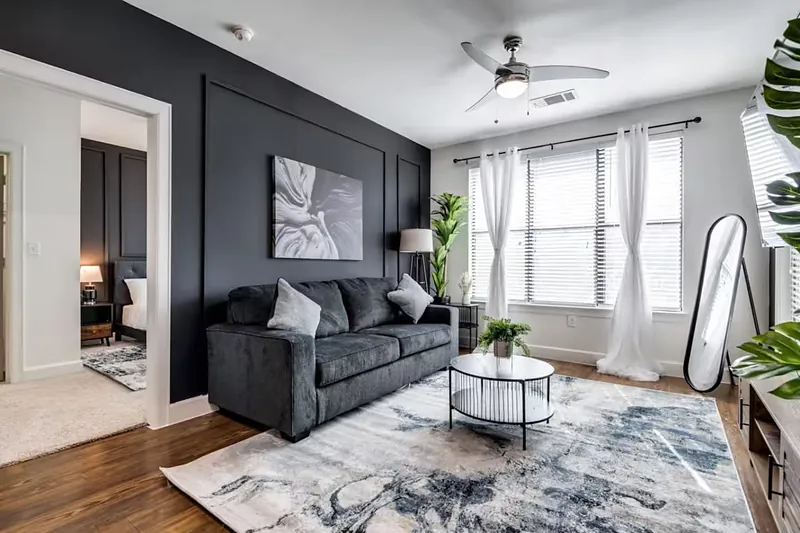
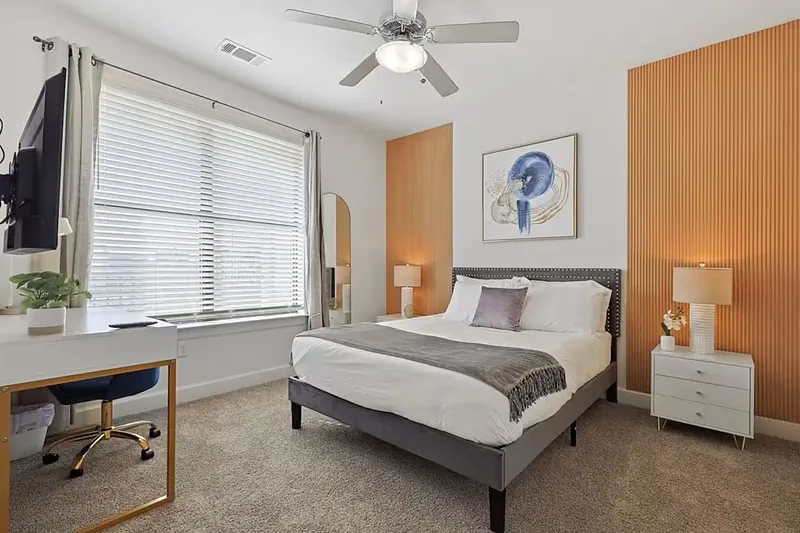
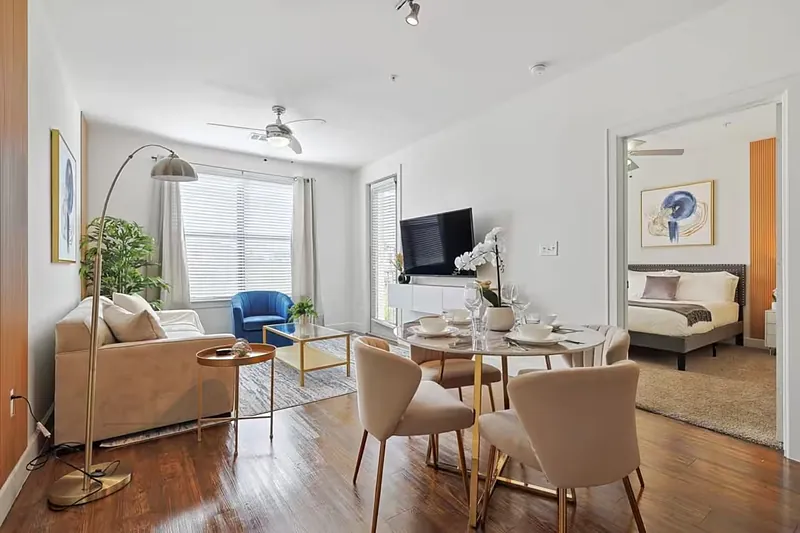
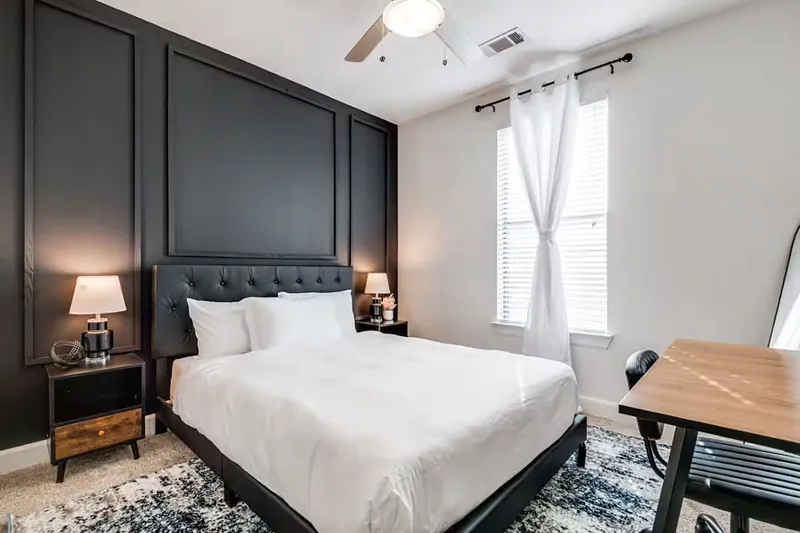
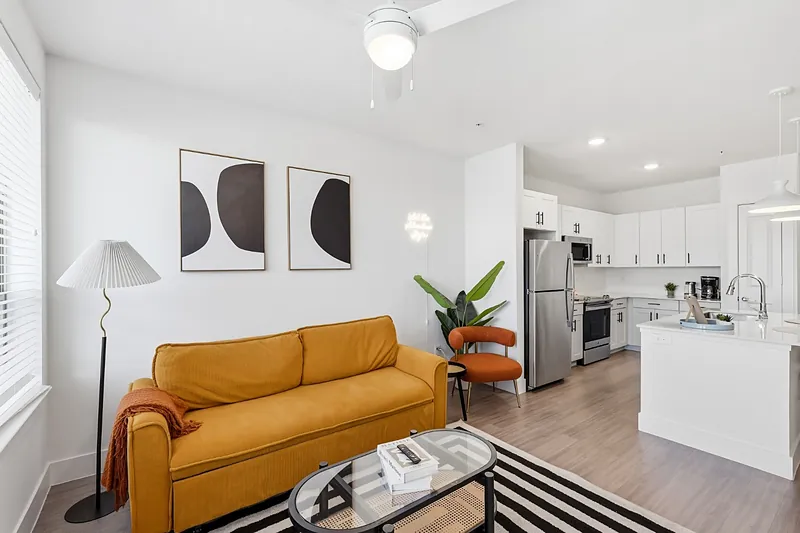
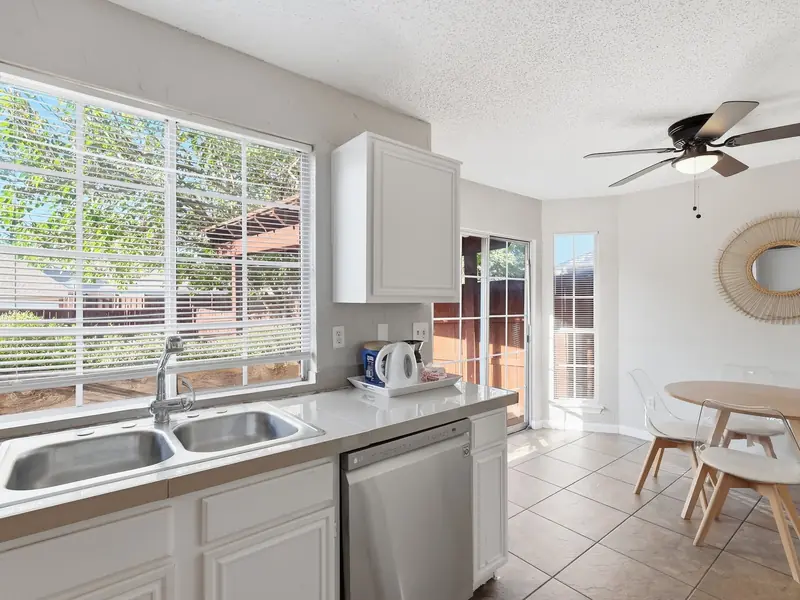
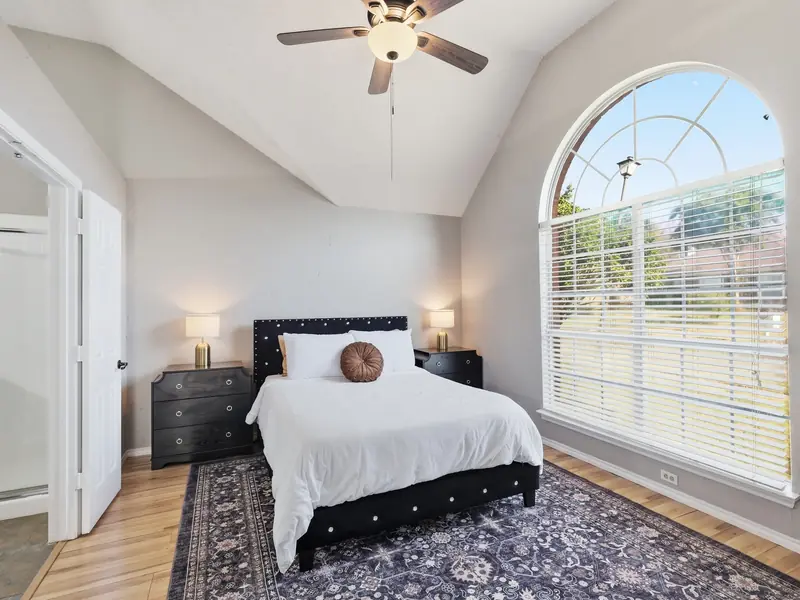
Real units our team designed and set up
Management and the tax strategy
Owner led. You run it, we back you up.
The hour test compares you to everyone who works on it, cleaners and our team included. So you run it, and we make it fast.
You do, about 4 to 5 hours a week
- Guest messagesWith our saved replies. About 1.5 hours a week.
- PricingYou approve our weekly suggestions. About 30 minutes.
- CleanersYou schedule them and check the turnover photos. About 45 minutes.
- Restocks and reviewsYou order and you reply. About 30 minutes.
- RepairsYou call the vendor from our list. About 30 minutes.
- A monthly walkthroughAbout 3 hours once a month.
We do
- Before it goes liveWe find, design and list it.
- SystemsSoftware, playbooks, message templates and pricing suggestions.
- Your cleanersFound, trained and split so no one passes your hours.
- On callWhen something breaks, you call us and we walk you through it.
About 200 to 250 hours a year. No time? Full management at 20% works for cash flow, not the year one write-off.
See if this fits your situation
Two minutes. Derek and his team read it and reach out.
Questions
Questions people ask us
Short, straight answers.
How the tax strategy works
How can an Airbnb lower my tax bill?
A short term rental you actively run can be treated as a business instead of a regular rental. A cost seg study splits out the short life parts of the property, and bonus depreciation writes those parts off in the first year. That loss can offset your other income, like W-2 or business income. Your CPA confirms the numbers and files.
Is this legal, or some kind of loophole?
It is how the tax code and the IRS rules are written. The IRS publishes the 7 day average stay rule and the hour tests itself. It only works if you actually meet them, which is why you keep records from day one and your CPA reviews everything.
What is a cost segregation study?
An engineering report that breaks the purchase into parts: furniture, appliances, finishes, outdoor improvements and the building itself. Short life parts can be written off much faster than the building. On many properties 20 to 30% gets reclassified. It is ordered after closing and can be finished after the year ends, before you file.
What is bonus depreciation, and is it still 100%?
It lets you deduct the full cost of qualifying short life parts in the year the property goes into service. Under the 2025 tax law, 100% bonus depreciation is permanent for property acquired after January 19, 2025. Land is never depreciable, and the building itself is still written off over decades. Your CPA confirms which parts qualify.
What is the short term rental rule?
A regular rental is usually treated as an investment, so its losses cannot offset your salary. When the average guest stay is 7 days or less, the IRS does not treat it as a rental activity. If you also materially participate, the loss can offset your other income. You do not need real estate professional status for this.
How is the 7 day average counted?
Total rented days divided by the number of stays, for that tax year, from actual stays. It is not based on your listing settings. In a thin first year, one long booking can push the average over 7, so we watch the calendar with you.
What is material participation, and how many hours do I need?
You have to be involved in running it, regularly. Most owners use the 100 hour test: more than 100 hours in the year, and at least as much as any other person, with each cleaner counted one by one. Other tests are more than 500 hours, or you doing substantially all of the work. The tests are not prorated for a short first year. Your CPA picks the test you meet.
Do my spouse’s hours count?
Yes. The IRS counts your spouse’s work with yours for material participation, even if your spouse is not on title. Log both of you, with the date, the task and the time.
What counts toward my hours?
Real operating work: guest messages, pricing, scheduling cleaners and checking turnovers, restocks, reviews, repairs and walkthroughs. Investor style work, like only reading statements, may not count. Our owner plan is about 4 to 5 hours a week, about 200 to 250 hours a year.
Do I need to be a real estate professional?
No. That status takes more than 750 hours a year and more than half of your working time in real estate, which most people with a full time job or business cannot meet. The short term rental route does not need it.
Can it offset W-2 income, business income and capital gains?
Yes, up to a yearly limit. The loss offsets profit from a business you actively run in full, plus up to the yearly cap of W-2 and investment income. For 2026 the cap is $256,000 single and $512,000 married filing jointly.
What happens to a loss above the cap?
It is not lost. It carries forward as a net operating loss that does not expire, and in later years it can offset up to 80% of your taxable income. The cap goes up with inflation each year, so size the purchase with it in mind. Some buyers spread purchases over two tax years.
How much will I actually save?
It depends on the property, your income, your filing status, your state and your hours. A deduction saves roughly your top tax rate times the deduction. The calculator above gives an estimate, and your CPA confirms the real number. Nothing here is a promise of any savings.
Does my state follow the federal rules?
It depends on the state. Some follow federal bonus depreciation, some add it back and spread it over several years, and some have no income tax. The federal savings do not change either way. The calculator has a state picker, and your CPA confirms your state before you buy.
What happens when I sell?
Some of the depreciation comes back as recapture. Short life parts are usually taxed at ordinary rates, and the building part at up to 25%. A 1031 exchange into another property can defer it. Plan the exit with your CPA from day one.
Can I use it for my own vacations?
Keep it to a minimum. Personal use of more than 14 days, or more than 10% of the days it is rented, whichever is greater, breaks the strategy. Plan family trips somewhere else.
What about year two and after?
The 7 day average and the hour test are checked every year. Year one is usually the big write-off, and later years have smaller regular depreciation. A later year that misses a test does not undo year one, but that year’s loss is held back. Your CPA tracks it with you.
Buying the property
What kind of property works?
One that guests book for short stays and that cash flows on its own. We pick for both, not just the write-off. Local rules, HOA rules and any permit or license are the buyer’s own due diligence.
Who designs and furnishes the property?
We do. Our own in-house designer leads the design, and our team furnishes and sets up the home, then gets the listing photos taken. The furniture, appliances and finishes are also the short life parts a cost seg study can break out. Your CPA confirms what qualifies.
How much cash do I need, and can I finance it?
Most buyers finance. The calculator uses about 25% down, about 3% closing costs and about 6% for setup. Our lender partners confirm your real terms. The write-off is based on the depreciable cost of the property, including the part you finance, not only your cash.
When do I need to buy to claim it this tax year?
It has to be live and bookable this tax year. Plan about 3 weeks to contract, about 3 weeks to close and about 10 days to set up. Later than that, you plan for next tax year.
What does placed in service mean?
Ready and available for guests: furnished, listed and bookable. Closing alone does not count. Keep proof of the go live date, like the listing date, photos and the open calendar.
Should I buy in an LLC?
Many owners do for liability. A single member LLC is usually ignored for income tax, so the strategy works the same way. Your CPA and your attorney confirm the right setup for you.
Running it and management
Who runs it day to day?
You do, with our systems. Guest messages with saved replies, pricing you approve, cleaners you schedule. About 4 to 5 hours a week. We set it up, find and train the cleaners, and you call us when something breaks.
Can I hand it off to full management?
Yes. Full management at 20% runs through Aurelian. A manager’s hours usually pass yours, so you will likely not meet the hour test. Plan that property for cash flow and equity, not the year one write-off. Your CPA confirms.
Do the cleaners’ hours count against me?
Yes. The test compares you to every person one by one, and that includes each cleaner and our team. So we split the work across two or more cleaners, and you note their hours too.
Do I need to live near the property?
No. Most of your tasks are done from your phone. The monthly walkthrough is the one in person task, so choose a property you can reach.
Money, risk and records
Will it cash flow?
We set it up to cash flow as an Airbnb, not just to write off. The calculator shows rental returns on the same property from market averages. Real results depend on the market, the property and how you run it. Nothing here is a promise of income.
What if it underperforms?
Markets move, so we vet the property and walk you through the numbers before you sign. After go live we help you adjust pricing and the listing. A bad deal is still a bad deal with tax savings, which is why we never pick a property for the write-off alone.
What if I get audited?
Your records are your answer, and your CPA handles the response. Keep an hours log, the stay records behind the 7 day average, the cost seg report, closing and setup receipts, and proof of the go live date. The IRS accepts any reasonable proof of hours, but a log kept as you go is the strongest.
Working with us
Who handles my taxes?
CPAs do. We are not a CPA firm. We work with STR and cost seg tax CPAs, or you can bring your own. Your CPA confirms your numbers and files your return.
What does Aurelian do?
Aurelian by BNB Portfolio handles the property side: market and deal analysis, finding the property, full setup, cleaners and owner led support, plus our network of licensed agents, lenders and CPAs. Our team has set up 500+ Airbnbs and operated 300+.
What does it cost?
It depends on the property and how much help you want. We go over it on the call, before you commit to anything.
How does the STR Tax Tracker help?
It logs your hours by date and task, for you and your spouse, and exports a clean report for your CPA. It is the simplest way to keep the records the hour test needs.
What is the next step?
Fill out the short form above. Derek and his team read it and you book a 30 minute call. Bring your CPA’s questions, and the person you decide with.
Not tax, legal or investment advice. Your own CPA confirms every tax number and files your return. Tax outcomes depend on your situation, including your income, your filing status, the hours you put in and how the property is used. Nothing on this page is a promise of any deduction, tax result or income. Examples are illustrative only. We work with licensed agent and lender partners and with CPAs; BNB Portfolio is not a real estate broker, lender or CPA firm.